How Artificial Intelligence Is Transforming the Global Fashion Industry
Artificial intelligence is moving from a side experiment to part of how fashion companies run.
Short answer
Artificial intelligence is moving from a side experiment to part of how fashion companies run. McKinsey and The Business of Fashion (BoF) say so in their annual industry report, and the examples are easy to see: shoppers get AI-assisted search, brands generate more product images, and some retailers are testing digital copies of human models. None of this is settled. The same period has produced public backlash, new labour rules for models, and new transparency law in the EU.
This article walks through where AI is actually being used, what real companies have said about it, and what is still uncertain.
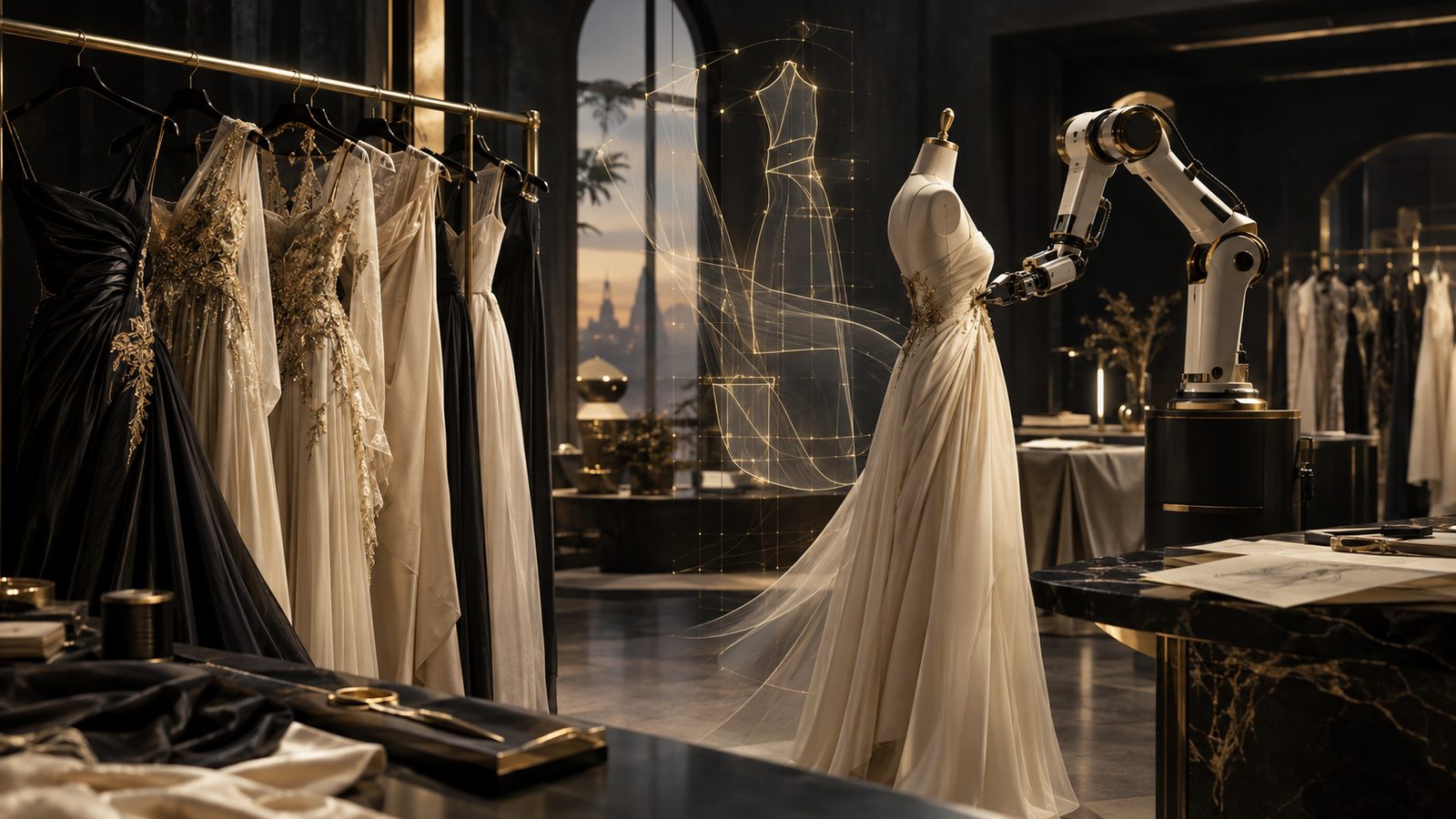
1. From "edge" to "necessity"
In February 2026 McKinsey summarised its report The State of Fashion 2026: When the rules change, produced with BoF. The authors write that "AI is shifting from a competitive edge to a business necessity." McKinsey says brands are using AI in online customer service, image and content creation, consumer search and product discovery. It also notes that shoppers are increasingly using large language models to compare products and get tailored recommendations.
Two things are worth keeping in mind when reading that claim:
- It comes from a consultancy report on the industry, so it describes direction of travel and executive priorities. It is not a count of how many fashion businesses have fully rolled out AI.
- The report framing is about the whole value chain: design, production, marketing and retail. Most public stories focus on the visible part, which is imagery and shopping.
Source: McKinsey, "How AI is shaping fashion's next chapter", 8 Feb 2026.
2. Where AI shows up in fashion today
Discovery and shopping
Search and recommendation are where shoppers meet AI most directly. BoF's coverage of the State of Fashion reports describes AI-powered curation as a way to help shoppers who are overwhelmed by choice find items they want. Google's shopping tools are one concrete example: in June 2023 Google launched a virtual try-on for women's tops from brands including H&M, Anthropologie, Everlane and Loft, showing garments on real models across a range of body types sized from XXS to 4XL. In 2025 it followed with Doppl, an experimental app that lets people try on outfits using a digital version of themselves.
Sources: BoF, "Fashion's New Era of Product Discovery" (4 Dec 2024); The Verge, 14 Jun 2023; Google blog, 26 Jun 2025.
Images and content
Fashion needs a lot of images: every product in many colours, on many people, for web, mobile and social. H&M's Chief Creative Officer Jörgen Andersson said in an October 2025 interview that "demand for content has exploded with e-commerce and social media," and that creating digital twins of models is one response. In H&M's description, the twins belong to the models and their agencies, who keep ownership and are paid. That is H&M's account of its own programme.
Source: FashionUnited interview with Jörgen Andersson, 21 Oct 2025.
Design and creative work
Designers use generative tools for sketches, moodboards and early concepts. Our how-to articles on this site go into the process in detail (see the design and mood board guides). The key point for a business reader: AI output in design is an input to human decisions, and in the US it matters legally who contributed the creative choices (see section 5).
Workforce and operations
BoF's January 2026 coverage of the State of Fashion report is titled "AI Is Shaking Up Fashion's Workforce." It describes brands deploying generative AI automation for routine tasks, and lists barriers to adoption: implementation cost, fragmented legacy systems, limited in-house expertise and uncertainty about governance and ethics. The takeaway from BoF is that results depend on redesigning processes and team structures, not on adding a tool.
Source: BoF, "AI Is Shaking Up Fashion's Workforce", 9 Jan 2026.
3. What the backlash teaches
Levi's and Lalaland.ai (2023)
In March 2023 Levi Strauss & Co. announced a partnership with Lalaland.ai, a company that builds AI-generated models, to test AI models that would supplement human models. The announcement said the aim included increasing the number and diversity of models shown. Critics objected, including to the idea that AI could stand in for hiring diverse people. On 28 March 2023 Levi's added an editor's note saying the announcement "did not properly represent certain aspects of the program," that it did not see the pilot as a way to advance diversity, and that it was not scaling back live shoots or live models.
Source: Levi Strauss & Co., 22 Mar 2023 (editor's note 28 Mar 2023); NBC News, 30 Apr 2023.
Guess in Vogue (2025)
In July 2025 CNN reported that American Vogue's August issue carried Guess advertisements whose model was AI-generated, created by the London agency Seraphinne Vallora. Small print on the page disclosed this. A TikTok video about it was viewed more than 2.7 million times, according to CNN, and public debate followed about models' jobs.
Source: CNN, 31 Jul 2025.
Lesson: disclosure helped the ad stay honest, but it did not prevent debate. How a brand frames and explains AI use matters as much as the technology.
4. Rules are arriving
- Models' rights (US): New York's Fashion Workers Act took effect on 19 June 2025, according to the Model Alliance. It gives models access to contracts and expense transparency, and registers management companies. The Model Alliance describes the Act as one of the first laws in the US regulating the use of AI in the world of work, and says unauthorised use of a worker's image is a violation of their rights. We have not read the statute itself, so check the text before quoting legal detail.
- Transparency (EU): the European Commission said that from 2 August 2026 new transparency rules apply: chatbots must tell users they are AI, deepfakes must be labelled, and AI-generated or altered content must carry machine-readable marks. Over 180 organisations had signed the related Code of Practice at that date.
Sources: Model Alliance, Fashion Workers Act page; European Commission press release, 31 Jul 2026.
5. Copyright and ownership
The US Copyright Office concluded in January 2025 that outputs of generative AI can be protected only where a human author has determined sufficient expressive elements, for example by arranging or modifying output. It said prompts alone are not enough. Using AI to assist does not bar copyright, but a purely generated design may not be protected. If you sell designs, keep records of human creative steps. This is general information, not legal advice, and rules differ by country.
Source: U.S. Copyright Office / Library of Congress, 29 Jan 2025.
6. What the workers' side says
The Model Alliance, a group that campaigns for fashion workers, reports a 2023 poll of more than 100 fashion workers in which 87% said they were concerned about AI's negative impacts. In 2025 it published research with Data & Society and Cornell University's Worker Institute. Its key takeaways, in its own words, include that generative AI is being used to take advantage of existing power inequities in the industry, that AI use is contributing to greater economic insecurity for fashion workers, and that AI may be reinforcing harmful beauty standards. These are the findings of an advocacy group with its research partners, and the poll was small. Read them as a serious worker perspective, not as industry-wide measurement.
Source: Model Alliance, Artificial Intelligence page (read 24 Nov 2026).
7. The legal picture is still moving
- EU: Article 50 of the AI Act applies from 2 August 2026. According to the Commission, providers of AI systems must design them so people are told when they interact with AI and must add machine-readable marks to AI-generated or manipulated content. Deployers must inform people when they are exposed to deepfakes, and to emotion recognition and biometric categorisation tools. The Commission also published guidelines on these duties.
- US copyright: Part 1 of the Copyright Office's AI report (31 July 2024) covers digital replicas, Part 2 (29 January 2025) covers copyrightability, and a pre-publication version of Part 3 on training generative AI on copyrighted works was released on 9 May 2025. The Office says a final Part 3 will follow without substantive changes expected. We checked the Office's AI page on 24 Nov 2026 and it still showed Part 3 as pre-publication.
- India: the Digital Personal Data Protection Rules, 2025 were notified in November 2025 with an 18-month phased timeline .
Sources: European Commission guidelines page; copyright.gov/ai; PIB, 14 Nov 2025.
8. A practical checklist for fashion teams
- Start with a task you can measure, such as product-page imagery or customer service replies.
- Decide what disclosure you will give shoppers before you publish AI imagery.
- If you use likenesses of real people, get written consent and agree payment first.
- Keep human review on anything customer-facing.
- Keep records of who made which creative decisions.
- Check the rules where you sell. EU and US rules differ, and India has its own advertising guidance .
What we do not know
- How many fashion companies have moved from pilots to full use. The reports describe direction, and the numbers vary by function.
- Whether AI models will lower or raise total demand for human models over time. The evidence so far is announcements and debate, not employment data.
Sources
McKinsey, How AI is shaping fashion's next chapter, 8 Feb 2026: https://www.mckinsey.com/featured-insights/themes/how-ai-is-shaping-fashions-next-chapter
BoF, AI Is Shaking Up Fashion's Workforce, 9 Jan 2026: https://www.businessoffashion.com/articles/technology/the-state-of-fashion-2026-report-ai-automation-workforce-organisation-talent/
BoF, Fashion's New Era of Product Discovery, 4 Dec 2024: https://www.businessoffashion.com/articles/technology/the-state-of-fashion-2025-report-generative-ai-artificial-intelligence-search-discovery/
FashionUnited, H&M's Jörgen Andersson on digital twins, 21 Oct 2025: https://fashionunited.com/news/business/ai-in-fashion-h-ms-chief-creative-officer-jorgen-andersson-on-the-digital-twin-journey/2025102168602
Levi Strauss & Co., 22 Mar 2023: https://www.levistrauss.com/2023/03/22/lsco-partners-with-lalaland-ai/
NBC News, 30 Apr 2023: https://www.nbcnews.com/business/business-news/ai-models-levis-controversy-backlash-rcna77280
CNN, 31 Jul 2025: https://www.cnn.com/2025/07/31/style/vogue-ai-models-guess-campaign
The Verge, 14 Jun 2023: https://www.theverge.com/2023/6/14/23760504/google-shopping-ai-modeling-virtual-try-on-search-filters
Google, Doppl, 26 Jun 2025: https://blog.google/innovation-and-ai/models-and-research/google-labs/doppl/
Model Alliance, Fashion Workers Act: https://www.modelalliance.org/fwa1
European Commission, 31 Jul 2026: https://digital-strategy.ec.europa.eu/en/news/commission-starts-enforcing-ai-act-rules-and-new-transparency-requirements-2-august
U.S. Copyright Office, 29 Jan 2025: https://newsroom.loc.gov/news/copyright-office-releases-part-2-of-artificial-intelligence-report/s/f3959c36-d616-498d-b8f9-67641fd18bab
Model Alliance, Artificial Intelligence: https://www.modelalliance.org/artificialintelligence
European Commission, Guidelines on transparency obligations (Article 50): https://digital-strategy.ec.europa.eu/en/policies/guidelines-ai-transparency-obligations
U.S. Copyright Office, Copyright and Artificial Intelligence: https://copyright.gov/ai/
PIB, 14 Nov 2025: https://www.pib.gov.in/PressReleasePage.aspx?PRID=2190014&lang=1®=3
Editorial note
AI-assisted, source-linked editorial. No firsthand product or tool testing is claimed. Tutorials and prompts are illustrative workflows, not tested results.
- No firsthand testing or interview is claimed anywhere in this article.
- Statute text of the NY Fashion Workers Act was not read; the Model Alliance's description is attributed.
Source links
- https://blog.google/innovation-and-ai/models-and-research/google-labs/doppl/
- https://copyright.gov/ai/
- https://digital-strategy.ec.europa.eu/en/news/commission-starts-enforcing-ai-act-rules-and-new-transparency-requirements-2-august
- https://digital-strategy.ec.europa.eu/en/policies/guidelines-ai-transparency-obligations
- https://fashionunited.com/news/business/ai-in-fashion-h-ms-chief-creative-officer-jorgen-andersson-on-the-digital-twin-journey/2025102168602
- https://newsroom.loc.gov/news/copyright-office-releases-part-2-of-artificial-intelligence-report/s/f3959c36-d616-498d-b8f9-67641fd18bab
- https://www.businessoffashion.com/articles/technology/the-state-of-fashion-2025-report-generative-ai-artificial-intelligence-search-discovery/
- https://www.businessoffashion.com/articles/technology/the-state-of-fashion-2026-report-ai-automation-workforce-organisation-talent/
- https://www.cnn.com/2025/07/31/style/vogue-ai-models-guess-campaign
- https://www.levistrauss.com/2023/03/22/lsco-partners-with-lalaland-ai/
- https://www.mckinsey.com/featured-insights/themes/how-ai-is-shaping-fashions-next-chapter
- https://www.modelalliance.org/artificialintelligence
- https://www.modelalliance.org/fwa1
- https://www.nbcnews.com/business/business-news/ai-models-levis-controversy-backlash-rcna77280
- https://www.pib.gov.in/PressReleasePage.aspx?PRID=2190014&lang=1®=3
- https://www.theverge.com/2023/6/14/23760504/google-shopping-ai-modeling-virtual-try-on-search-filters
Written by Pooja Ruhela, Founder & Editor · The Modera Society